

FAQs: Harmonica Types
Here is a collection of Frequently Asked Questions (FAQ's) relating to different types of harmonicas. Take a look, you are likely to find your question(s) answered on this page or one of the blue-linked pages above.
- Which harmonica (brand) should I buy to follow the lessons on this site?
- What kind of harmonicas won't work for the lessons on this site?
- Are there many types of harmonicas?
- What is the difference between a harp (or blues harp) and a standard diatonic harmonica?
- Hohner makes a harmonica called a 'Blues Harp'. Is this better for playing blues than a standard diatonic harmonica like the Lee Oskar or Special 20?
- What is the difference between chromatic and diatonic harmonica?
- Is it possible to play blues on an instrument like chromatic harmonica where bending is very limited?
- My interest seems to lie more in playing songs and melodies (like you would on a piano), rather than accompaniment or blues jamming. Would a chromatic harmonica be better for me than a diatonic?
- Are wood harmonicas better than the plastic ones?
- I have a four hole harmonica. Do you have any tips for 4 hole harmonicas?
- I have recently acquired an unusual harmonica. How can I get some information on it?

- Which harmonica (brand) should I buy to follow the lessons on this site?
You'll need a good quality diatonic type harmonica to learn and practice on with hole numbers imprinted above each hole. The standard 10-hole diatonic harmonica is used for most blues, folk, rock, and country styles (of course you would need a standard chromatic harmonica if utilizing our chromatic harmonica instruction).
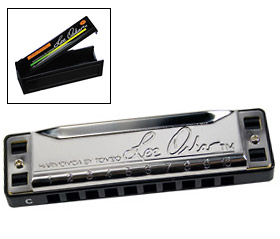
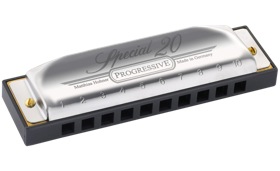
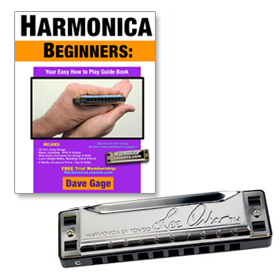
You can't go wrong with the Lee Oskar Major Diatonic or the Hohner Special 20 (preferably in the key of "C"), both are great for players just starting out.
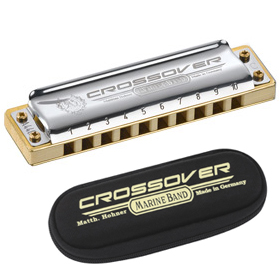
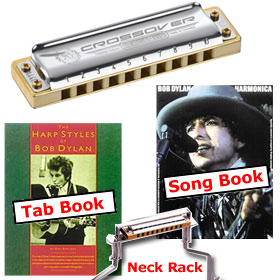
The Hohner Marine Band Crossover and the Suzuki Manji Diatonic and the Seydel 1847 Classic are also excellent choices, a bit more pricey, but great quality, tone, and playability with a wood comb. (Can't decide? Pick one, and try another when you need to buy different key.) The Lee Oskar harmonicas also feature the 1st Position and 2nd Position keys printed on the ends for easy reference. See our Which Harmonica Do I Need? page for more suggestions and information.
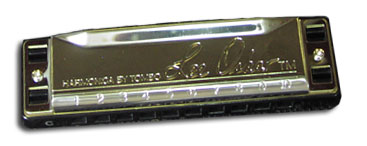
Recommended harmonica: Lee Oskar diatonic in the key of "C".
- What kind of harmonicas won't work for the lessons on this site?
Any harmonica that does not have 10 holes (i.e. 8, 12, or 20 holes) will not work for the lessons on this site. The harmonicas that have two rows of holes, one on top of the other, are generally tremolo harmonicas and will not work for these lessons. Tremolo harmonicas are primarily used for special effects, and they are not made to play blues, bend notes, or play anything other than the most simple 1st position melodies. Chromatic harmonica is the exception, but has it's own section at Harmonica Lessons.com. For Chromatic Instruction, songs, and information, visit the chromatic harmonica portion of this website.
If you have what appears to be a standard diatonic harmonica but it doesn't have any numbers over the holes, it is most likely a very inexpensive one and it would be to your advantage to upgrade to a better quality diatonic (see above question for recommendations). See the Recommended Harmonicas For This Site page for more information.
- Are there many types of harmonicas?
Yes, quite a few, but none are used as much as the diatonic and chromatic harmonicas. Some of the other types include: bass harmonica, chord harmonica, tremolo and echo effects harmonicas, etc. See the Recommended Harmonicas For This Site page for more information.
- What is the difference between a harp (or blues harp) and a standard diatonic harmonica?
Nothing. The term harp is short for "blues harp" and they are both slang for harmonica. Yes, it is a bit confusing at times when people use the term "harp" to refer to the harmonica since there is another instrument called harp that is used in classical music (and made popular in the movies by one of the Marx Bros). That's slang for ya. Other slang terms for harmonica include: mouth organ, tin sandwich, French harp, short harp, and Mississippi saxophone.
- Hohner makes a harmonica called a 'Blues Harp'. Is this better for playing blues than a standard diatonic harmonica like the Lee Oskar or Special 20?
Absolutely not. The 'Blues Harp' is just a name for a wood combed diatonic that is made by the Hohner Company. It is no better for playing blues than any other harmonica that has 'Blues' in it's name. This is just smart marketing by the world's largest harmonica company. If anything, because it is made of wood, it can be much more difficult to play whether you are trying to play blues or any other style of music.
- What is the difference between a chromatic and diatonic harmonica?
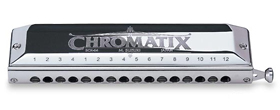
They are really two different instruments. See our General Overview section for an in-depth look at the two. Most good players specialize in one or the other. It is less common to find players that excel on both, but they are out there.
- Is it possible to play blues on an instrument like chromatic harmonica where bending is very limited?
It sure is. If bending was a prerequisite for playing the blues, then there would be no such thing as blues piano.
- My interest seems to lie more in playing songs and melodies (like you would on a piano), rather than accompaniment or blues jamming. Would a chromatic harmonica be better for me than a diatonic?
Yes. Since a chromatic harmonica has all the notes available, not unlike a piano, you might be better off with the chromatic for what you want to do. Visit our Store for chromatic harmonica recommendations.
- Are wood harmonicas better than the plastic ones?
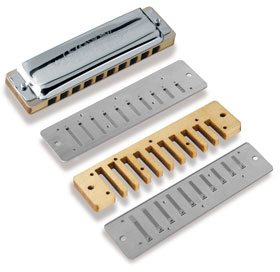
No. Quality-wise it can to be just the opposite. Many of the wood harmonicas leak quite a bit of air and are not recommended for beginners. In terms of the sound or tone, the choice between wood and plastic (or metal) combs comes down to personal preference. Any reasonable quality harmonica in the hands of a good player will sound good. The Hohner Marine Band Crossover is an example of a high quality diatonic harmonica with a sealed bamboo comb that plays and sounds great.
- I have a four hole harmonica. Do you have any tips for 4 hole harmonicas?
This refers to the mini-harmonicas (sometimes made into a necklace) or a real simple kids harmonica. In most cases, the first hole (lowest note) is equivalent to the hole 4 on a standard diatonic harmonica. Any songs that would start on hole 4 on a standard diatonic would now start on hole 1. Hole 1 is the beginning of the major scale. Playing options are limited, but they can be fun.
- I have recently acquired an unusual harmonica. How can I get some information on it?
Check out some of the sites on this page- http://www.harmonicalinks.com/others.html. Someone at one of these sites should be able to help you out.

If your thirst for knowledge has not yet been satisfied, move forward to our next FAQ page, Technique Questions.